Technical SEO: what your site needs so Google understands it
27 de October, 2026 · Development
Titles, descriptions, sitemap, structured data and Search Console. The technical foundation that has to be right before thinking about content or ads.
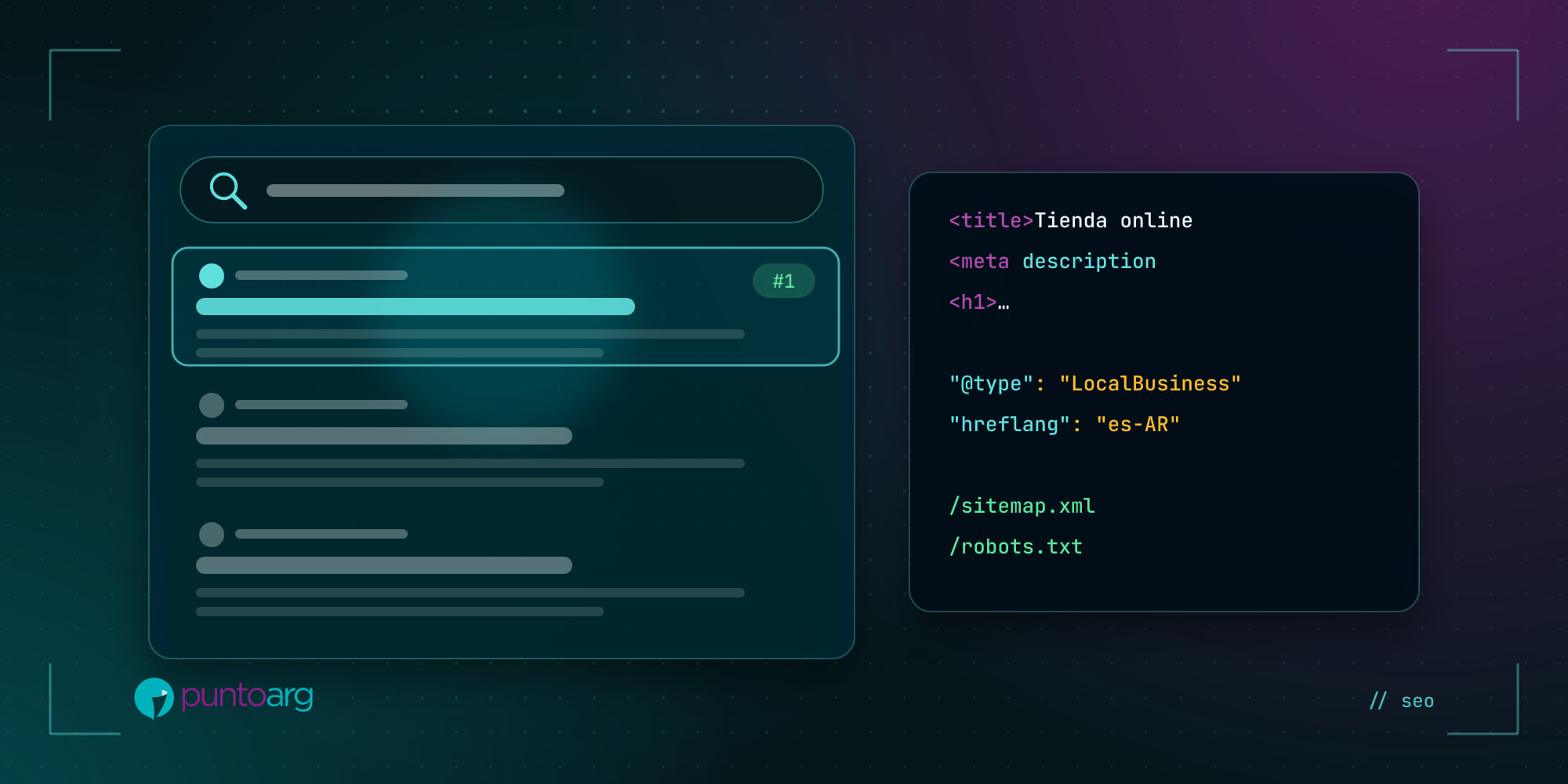
SEO (search engine optimization) has two halves. One is content: writing about what your customers search for. The other is technical: building the site so Google can find it, read it and understand what it’s about. If the technical foundation fails, the best content in the world stays hidden.
1. Let Google in
- XML sitemap: a file listing every important page on your site. It’s handed to Google so none slip through.
- robots.txt: tells crawlers which parts don’t need crawling, like the admin panel.
- No orphan pages: every page must be linked from at least one other.
- Errors under control: if you change an address, the old one must redirect to the new one (301 redirect) so you don’t lose what you’d earned.
2. Make every page say what it’s about
- Title: unique per page, with the main topic first and your brand name last. It’s what appears in blue in the results.
- Meta description: the text shown below. It doesn’t rank on its own, but it decides whether people click.
- One H1 and orderly subheadings: the heading hierarchy helps Google and people scan the content.
- Readable URLs: /services/online-store says more than /page?id=37.
- Images with alt text: describing the image for those who can’t see it, Google included.
3. Structured data
Structured data (using the schema.org vocabulary) are invisible tags that tell Google, in its own language, what each thing is: this is a local business with this address and these hours; this is an article published on this date; this is a product at this price. They enable rich results and improve how you’re shown.
4. Languages and duplicates
If your site is in several languages, each version must tell Google which pages are its equivalents (hreflang tags). And if the same page can be opened from several addresses, the canonical tag marks the official one.
5. Speed and mobile
Google indexes the mobile version of your site and considers the loading experience. A slow site, or one that’s awkward on the phone, starts at a disadvantage.
6. Measure with Search Console
Google Search Console is free and it’s how you see your site the way Google does: which pages are indexed, which searches you appear for, how many clicks you get and what errors it found. If your site isn’t registered yet, that’s the first thing to do.
How we do it
On the sites we build, this foundation comes included: titles and descriptions editable from the panel, automatic sitemap, structured data, properly marked language versions, optimized images and Search Console setup. After that, content (like this blog) does the rest.
Want to know how your site is doing? We’ll run a technical review.
Sources
- Google Search Central, SEO Starter Guide.