Online courses and memberships: how to turn your knowledge into a platform
06 de October, 2026 · Digital business
What an e-learning platform needs, when it’s worth having your own and how to design lessons people actually finish. What we learned building educational platforms.
If your business knows how to do something well, that knowledge can become a product: a course, training for customers or staff, a paid community. E-learning platforms and membership areas let you sell and deliver it at scale, without depending on schedules or a classroom.
At PuntoArg we’ve built platforms for academies, educational publishers and organizations that needed to bring their content to the classroom and the screen. This is what we learned.
What a course platform needs
- Secure sign-up and access, with different roles: students, teachers, admins.
- Courses organized into modules and lessons, with video, text, downloads and activities.
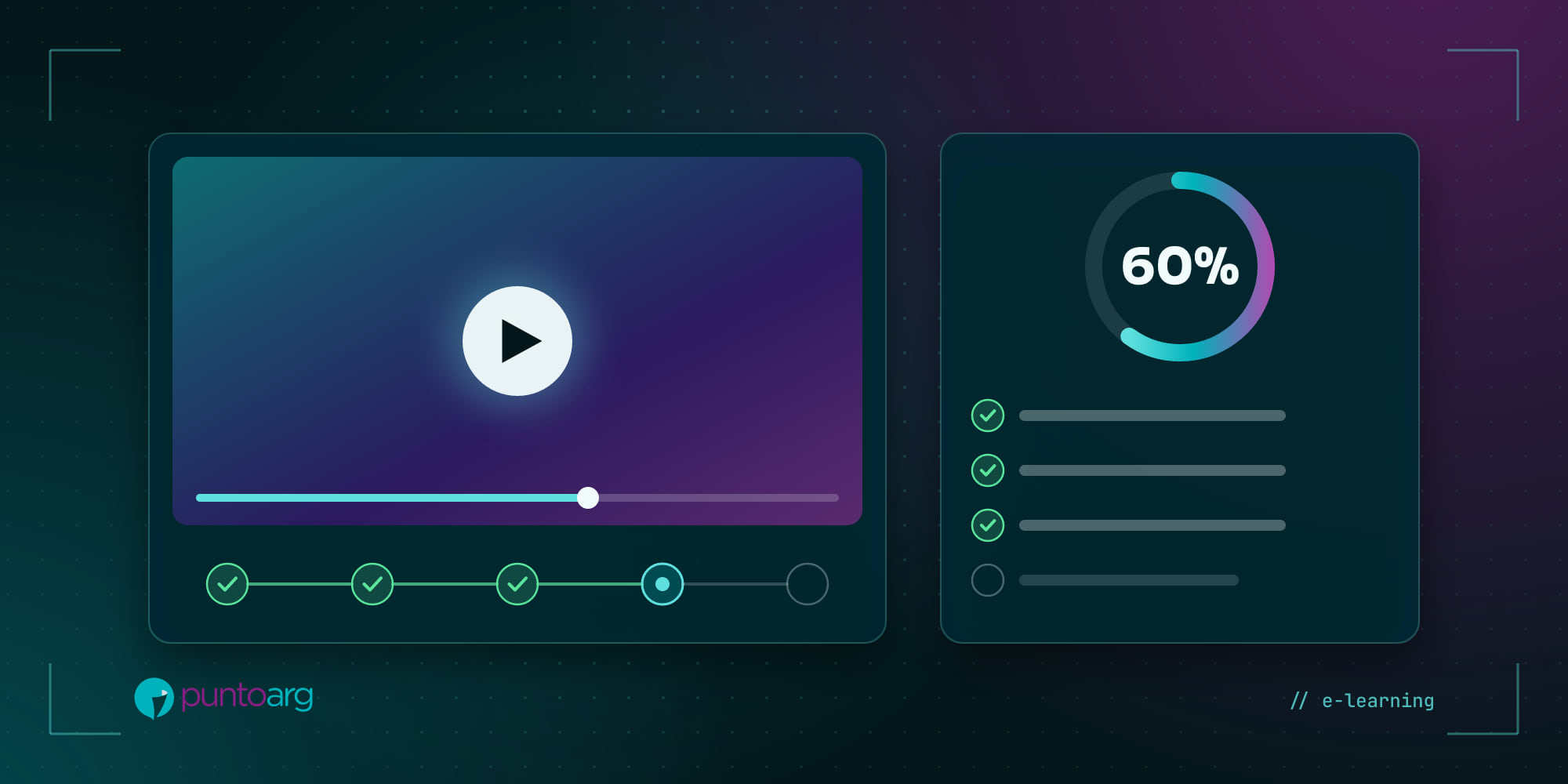
- Visible progress: what I’ve completed, what’s left, where I left off.
- Assessments with automatic grading and, if needed, certificates.
- Built-in payments: one-off, monthly subscription or cohort access, with the payment methods your audience uses.
- A management panel to upload content without depending on a developer, see enrollments and measure results.
- Working well on the phone, because many students study on the bus or in spare moments.
Your own platform or a third-party one
Third-party course platforms are good for validating an idea quickly. But they have limits: per-sale commissions, little brand customization and, most importantly, the data and the relationship with your students aren’t fully yours.
Your own platform makes sense when:
- You have enough students or sales for commissions to weigh.
- You need a particular learning experience (simulators, interactive diagrams, staged journeys).
- You want to integrate it with your website, CRM or internal systems.
- It’s for an institution that needs its own objectives, standards and reports.
Designing lessons people finish
The big problem with online learning isn’t signing up, it’s finishing. Technology helps, but what matters most is how the content is designed:
- Short lessons, each with a clear goal.
- A structured journey: on an educational platform we built, each lesson follows five stages —hook, explore, explain, elaborate and evaluate— so students never get lost.
- Interaction, not just videos: questions, activities, interactive images, case studies.
- Measuring learning: a test before and another after show how much was really learned.
- Support: reminders, forums or a channel for questions. Feeling supported reduces dropout.
Membership areas: beyond courses
Not everything has to be a course. A membership area can offer exclusive content, downloadable resources, recorded live classes or a community. It’s a recurring-revenue model that works very well for professionals, consultancies and brands with a loyal audience.
Where to start
Before thinking about the platform, define three things: who you teach, what they’ll be able to do when they finish and how you’ll charge. With that clear, the technology practically chooses itself.
If you have knowledge to share and want a platform to match, write to us and we’ll think it through together.